There’s more to their day.Explore twelve household moments
01 / A place to begin
The day starts with three things at once.
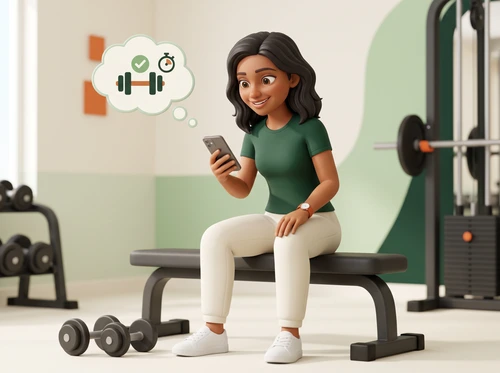
Breakfast is ready. A receipt is still on the table. Asha’s gym bag is by the door. She just needs to know where to begin.
Home brings the tasks, meals and training she may see into one place. Away on a trip, the next recorded booking takes their place.
Asha’s morningFictional example
Needs a look
Review the grocery entry
Next for Asha
Today’s workout
Already planned
Lunch at home
A fictional day, shown from Asha’s point of view.
A next step, and a little less to carry in her head.
Home · Meals · Training
02 / The shared shop
The groceries are home. So is the question of who paid.
Asha paid at the shop. Ravi is putting everything away. They would rather start dinner than rebuild the bill in messages.
Record the purchase with the agreed shares. Review a batch before approving it; after paying outside Apnavera, record the payments together.
One fictional grocery shopFictional example
Paid by Asha
₹1,200
Asha’s agreed share · 60%
₹720
Ravi’s agreed share · 40%
₹480
An illustrative agreed split. Payments happen outside Apnavera; they are recorded here.
The split is in view. Dinner can carry on.
Entries · Settle · Spending
03 / The month ahead
A trip deserves room beside the bills.
Asha, Ravi and Neha are saving for a trip. They want its goal in view alongside the month’s bills, without counting the same plan twice.
Plan keeps the month’s budget and Trips ahead apart. A trip can carry its own savings goal, with recorded contributions and the remaining amount.
Their example trip goalFictional example
Goal
A trip with its own savings goal
Before setting money aside
Review bills and the monthly plan
When checking an account
Look at the balance date
Goals are records; Apnavera does not move money. Forecasts include plans and estimates.
Something to look forward to, with the practical parts in view.
Budget · Accounts · Bills & EMIs · Forecast
04 / One more set
Remember the set. Stay in the workout.
Asha has just finished a set. She wants to keep the details without losing her place or carrying them home in her head.
She logs a set, takes her rest and checks the next set filled from recorded history. Best yet appears only when her record supports it.
Asha’s sample sessionFictional example
Dumbbell press
Set 2 of 3
Recorded
8 reps · 10 kg
Next
Rest, then set 3
A fictional workout record, not a training recommendation.
Take the rest. Pick up the next set.
Live session · Workout plans · History · Progress
05 / Lunch, figured out
One less decision in the middle of a busy day.
Ravi has an afternoon to get through. Lunch does not need to become another conversation about what to make.
Check the planned meal and record what was eaten. Supplement stock can show an estimated run-out and a way to add it to groceries.
Ravi’s meal planFictional example
Lunch
Dal, rice and vegetables
After eating
Record the meal
Later
Check the planned dinner
A meal photo can start a record too; check the suggested food and portion before saving.
Lunch is done. There is room to think about something else.
Today’s meals · Weekly plan · Groceries · Supplements
06 / A day together
Before “shall we?”, see what’s already planned.
Asha and Ravi have a picnic in mind. Arun would like to come too. They need to find a time to talk about.
The month brings plans, holidays and time off together. Trip bookings and recorded deadlines sit on their dates, with private plans kept separate.
A possible SaturdayFictional example
Morning
Asha’s recorded plan
Afternoon
A picnic idea to discuss
Next step
Check with everyone coming
An empty calendar slot is not a guarantee that everyone is available.
A little planning can make room for a day together.
Calendar · Household plans · Time off
07 / Something to look forward to
The trip begins long before the train arrives.
Asha, Ravi and Neha are gathering ideas for a break. Places, dates and costs are already scattered across their conversation.
A to-book item can have someone handling it. When its linked booking is booked, the task closes; a suggestion still waits for confirmation.
Their next tripFictional example
Who’s coming
Asha, Ravi and Neha
Still a plan
Places and expected costs
After a purchase
Record it in the trip’s spending
A planned cost is an intention, not money already spent.
A plan they can return to—and memories to bring back.
Trips · Tasks · Bookings · Budget
08 / When it’s time to go
The reservation, just when they need it.
They are at the station. Neha needs the booking they saved, not another search through messages.
Home can show the trip’s next recorded booking and money. Open the trip for its detail; save supported ticket files before going offline.
Before leaving homeFictional example
Booking record
Keep the reservation with the trip
Ticket file
Save an offline copy on this device
At the station
Open the saved file
Offline copies cover saved files. Maps and trip edits need a connection. Apnavera does not book tickets.
Find the useful detail. Get back to the journey.
Bookings · Saved files · Day-by-day itinerary
09 / Making the dates work
A break starts with finding time for it.
Neha has her work calendar open. She wants to see which dates might give her a longer break without using more leave than she has.
Compare breaks using her leave rules and employer holidays. Link planned leave to the trip and record what her employer said separately.
Neha’s time-off checkFictional example
Start with
Her leave rules and holiday list
Compare
Suggested breaks and leave days needed
Then
Choose dates and plan the trip
Suggestions depend on the information entered. Employer approval happens separately.
A possibility she can discuss, before making arrangements.
Leave · Best breaks · Holidays · Trip planning
10 / That little receipt
One paper dealt with. One less thing to remember.
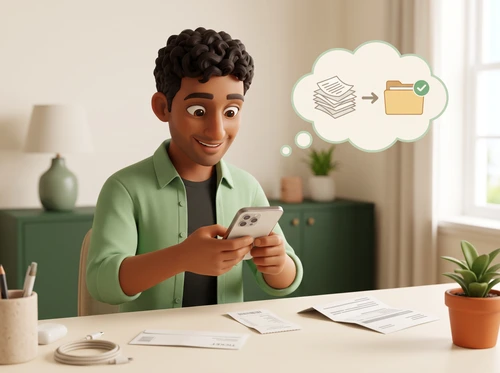
Ravi has a receipt, a statement and a ticket on the desk. He wants to know where each one belongs—and what still needs him.
Review a document when reading is available. In the Vault, pick up a renewal, see who is handling it, and keep the renewed paper linked to its history.
A receipt being reviewedFictional example
Uploaded
The file has arrived
Needs Ravi
Check which purchase it belongs to
Next
Review the result before using it
Accepted file types and reading availability apply. An upload is not automatically a completed record.
The unfinished part is visible. The paper has a place.
Import inbox · Document review · Vault · Renewals
11 / A little time to catch up
The week should not need detective work.
Over tea, Asha and Ravi want to catch up on what changed, what needs a reply and what is coming next.
Updates link to work that needs attention. Activity includes task changes and personal, money or trip filters; the report brings the recorded week together.
Their weekly check-inFictional example
Needs attention
An entry waiting for review
What changed
Follow its Activity record
The bigger picture
Open the weekly report
Reading a notification does not complete its task. Private report details stay with their permitted reader.
A clearer conversation, with time left for the evening.
Neha is joining their household space. Sharing the practical things should still leave everyone with choices about what stays personal.
Invite people with the access intended for them. Feature permissions and private account ownership are separate; choose the parts of Apnavera that fit your routines.
A place for NehaFictional example
Shared responsibilities
Choose what she can read or change
Personal accounts
Remain with their named holders
Start small
Pick one useful routine together
Being an administrator does not open someone else’s personal account.
One place for the life they share. Space for each person in it.
People · Access · Privacy · Preferences
A day in your household
Pick a moment. See what clicks.
Six little parts of life. One place to bring them together. Choose a scene, then try the example.
1 / 6
01 / 03A shared shop, with a split you can both understand.The shared expense is clear. Dinner can carry on.A household’s contributions can look different and still make sense together.
1 / 3
Shared money
One shop. A shared record.
Asha bought the groceries; Ravi is putting them away. Record who paid and how the cost is shared, then get back to dinner. Personal money keeps its own boundaries.
ApnaveraInteractive example
Groceries
Paid by Asha
Household split
Your chosen contribution ratio
Give it a try. This is a fictional household.
Expenses & splits
Accounts & balances
Budgets & goals
Illustrated stories and interactive examples, with fictional households. Your own household starts with you.
A shared space. Room for you.
Together doesn’t mean everything.
Shared spending has a household view. Personal money has its own. Choose what each person can read or change, and which parts of Apnavera you use.
Shared money10 storiesCatch the expense. Keep the evening.Share the home. Understand the spending.
Catch the expense. Keep the evening.
Dinner is over, but Neha knows the details on that little receipt will be harder to remember tomorrow. She starts an expense draft, checks who paid and how to share it, then saves it. The purchase has a record; the evening can carry on.
Share the home. Understand the spending.
Asha paid for the groceries. Ravi is putting them away. Neither wants dinner to turn into another discussion about who owes what. Apnavera records the shop using the household’s agreed shares. Choose equal shares, fixed amounts or custom percentages; sharing by income needs everyone’s agreement. The Household is their shared budget, not a bank account.
A second look at a big household spend.
An appliance receipt lands on the table, and Arun wants to understand the recorded spend before approving it. Apnavera puts entries needing review in one list, where a permitted reviewer can approve, decline or ask for a change. If an item is returned later, record its refund against the original spend so the story stays together. A batch review still shows the selected entries before confirming, with Undo for the recorded approval.
Settle up. Get back to being a household.
After a shared weekend, Neha and Ravi remember different bits of what each person paid. Apnavera brings the recorded expenses and balances together so they can see who owes whom. They pay each other outside Apnavera, then record that payment here. There is less to reconstruct over breakfast. When several payments have happened, they can review and record them together.
A shared home can still have personal space.
Neha shares the grocery bill, but her own purchases are still her business. An account in Apnavera is Personal or Joint, and only its named holders can open it—even an administrator needs to be a holder. Joint describes sharing inside Apnavera, not ownership at the bank. Sharing a home leaves room for personal money.
Your accounts, with the dates that matter.
Ravi has a statement on the table and a question: does this balance still describe today? Apnavera shows recorded balances with their dates and the entries that followed. After a statement import, its check explains whether the figures agree, need attention or could not be checked. He can see what needs a closer look.
Give the month a plan you can see.
Asha and Neha made a plan for the month. Halfway through, a few extra receipts have arrived. Apnavera puts the planned amounts beside recorded spending so they can review what changed and update their budget. The next conversation starts with the same figures in front of them.
Make room for something that matters.
Asha and Ravi would like a little herb garden on the balcony. It is a small wish, but it deserves a place beside the everyday bills. They can keep a savings goal and record amounts set aside in Apnavera, returning to it as the month unfolds. The app tracks those records; it does not move their savings. A trip can carry a savings goal of its own, separate from the ordinary monthly plan.
See the pattern behind the receipts.
Neha remembers the individual shops and café stops, but wants to understand the month they add up to. Apnavera groups recorded spending by period and lets her inspect the detail. When she and Ravi talk about next week, they can start with what actually happened.
Look ahead with the assumptions in view.
Ravi is considering an appliance; Arun remembers a bill coming up. Apnavera’s forecast brings recorded commitments, including regular bills and EMIs, together with planned and estimated amounts. They can inspect where each figure came from before changing the plan. It is a view of the assumptions, not a promise about the future.
Training6 storiesKnow the workout before you reach the gym.Log the set. Stay in the session.
Know the workout before you reach the gym.
Ravi has made it to the gym. Deciding what to do should not use up the time he set aside to train. Apnavera keeps his planned session and the choices to start, resume or log a workout close together. He can check the plan and begin.
Log the set. Stay in the session.
Asha finishes a set and wants to remember it without losing her place. Apnavera keeps the exercise, set record and rest context together. If she chooses to share a live session with one household member, each keeps their own sets and sees the other’s progress without seeing their weights. They can train together at their own pace. The next set can use recorded history; a best-yet message depends on the actual sets.
Recognize the exercise before you choose it.
Neha is looking at an unfamiliar piece of equipment. Apnavera’s exercise library gives her pictures and movement details to consult before choosing an exercise. She and Ravi have a clearer reference for their conversation at the gym.
A week of training that you can return to.
Asha and Neha look at the week before packing their gym bags. They can choose or build a workout plan and place it on the days that fit. When the day comes, the session is there to pick up. Planning once leaves fewer decisions at the gym door.
The workout happened. You can still record it.
Ravi did the workout, but did not log it while he was there. Back home, he can record the completed session with its date, exercises and sets. His training history can include the effort he remembers, even when life got in the way of recording it at the time. Pasted notes can become a draft after the exercises and sets are reviewed; pasting does not save them.
Look back at the work you actually did.
A busy month can make Asha feel as though she hardly trained. Her recorded sessions tell a more specific story. Apnavera lets her revisit workouts, attendance and progress over a chosen period, including recorded personal bests. She can notice the work she did and decide what to try next.
Meals6 storiesThe next meal, without another round of guessing.A little planning. Fewer daily food decisions.
The next meal, without another round of guessing.
It is lunchtime and Ravi has other things on his mind. Today’s meals shows the current meal and what is planned later; he can record what he actually ate. A meal photo can also start a record: check the suggested food and portion before confirming. When photo reading is unavailable, suggestions come from the plan.
A little planning. Fewer daily food decisions.
On Sunday, Asha and Ravi choose a few meals while there is time to think. Apnavera lets them plan for a chosen person and copy meals to selected days. On a busy weekday, the lunchbox starts with a decision they already made. Different people can still have different plans.
Find a food idea you can recognize.
Neha has rice and vegetables in the kitchen, but wants an idea she can picture. Apnavera’s food explorer brings food images, filters and available serving details together. She can choose something for her meal plan, then get on with making it.
Meals can follow the day you actually live.
Ravi’s later breakfast and Neha’s evening meal do not follow the same clock. Each person can configure timing anchors for their day, with weekday and weekend routines. Apnavera uses those settings to place meals in the plan. Their routines can differ without making either person’s day the default.
A grocery list that goes with you.
Asha checks the list while Arun picks up the tomatoes. Apnavera can build that list from planned meals, and household members can tick items as they shop. Back home, someone with spending access can record the shop as a shared expense. The meal plan, shopping list and purchase stay connected.
Keep your own supplement plan in sight.
Arun has a supplement routine he has already chosen. Apnavera keeps that plan and its completion records in view, so he can check what he recorded before carrying on with breakfast. It does not choose supplements or doses for him, or replace advice. Recorded stock can provide an estimated run-out and a way to add it to groceries.
Plans & trips3 storiesMake room for the days you look forward to.A week in one readable place.
Make room for the days you look forward to.
Asha and Ravi want a day together; Neha has a different work calendar. Apnavera brings household plans, holidays and recorded time off into view, and offers possible breaks using the leave information configured for each person. They can compare dates before making arrangements. Employer approval and travel bookings happen separately. Planned leave can be linked to a trip, with employer status recorded separately.
A week in one readable place.
Over Sunday tea, Asha and Ravi want to catch up on the week without assembling it from messages. Apnavera’s weekly report brings recorded spending, settlements and upcoming items together, with supporting links and a private section for the reader where available. They have a shared place to begin the conversation.
The trip, with the next thing close at hand.
The train is coming, and Neha needs the reservation they saved. Apnavera keeps trip plans, booking records, places, photos and costs together so the next useful detail is close at hand. They can also save supported trip files for offline access before leaving. Apnavera keeps their booking records; it does not book the journey. Trip tasks show who is handling a booking and close when their linked booking is booked; a suggested match still needs confirmation.
Paperwork2 storiesGive the paperwork a place to land.Find the important paper when you need it.
Give the paperwork a place to land.
Ravi has a receipt, a statement and a ticket to deal with. He can upload a document and follow its progress in Apnavera. When document reading is available, he can review what it found and answer questions with the paper beside him. A file that still needs attention stays visibly unfinished.
Find the important paper when you need it.
An appointment is coming up, and Asha needs the right paper. She can find a saved document in Apnavera, open the files she is allowed to see and check its renewal date. When a paper is renewed, the old version can stay linked to the new one. Arun can return to the history instead of starting the search again. They can see who has picked up a renewal, or download its recorded date for a phone calendar.
Your household5 storiesYour day, without the scattered tabsA real day has room for meals and movement.
Your day, without the scattered tabs
Breakfast is on the table, a receipt still needs recording, and Asha wants to get to the gym. Home brings her meals, training and household tasks into one view. She can choose what needs her next without opening each part of Apnavera in turn.
A real day has room for meals and movement.
Asha gets home with a bag to put down and an evening still to figure out. The wellness view brings her meal plan and training together so she can pick up the next activity. A useful routine can include a workout, dinner or a quieter day without rebuilding the plan from memory.
Know what needs a reply. Leave the rest quiet.
Neha sees an update about something the household needs to review. Apnavera points her to the task, while Activity lets her inspect recorded changes. Reading the message does not complete the task. With reminder preferences and quiet hours, she can choose how interruptions fit her day. Activity includes trip task events, with personal, money and trip filters.
Choose what you share. Keep what is yours.
Asha wants to share household responsibilities without sharing every personal detail. Apnavera separates what a member may do from which private records they may open. People can choose income recipients, agree account sharing and the history a new holder sees, and select the parts of the app they use. Access to a feature does not open someone else’s personal money.
A household space starts with your people.
Neha arrives with a plant and an invitation to the household’s Apnavera space. Asha and Ravi can bring her in with the access intended for her, then start with one useful routine: a shared expense, a meal plan or a workout. They can add the rest as it becomes useful to the life they share.